






























+964 770 018 5648
spark@infinity-en.com
English flag
English
Select a Language
English flag
English
Arabic flag
Arabic
0
Categories
Storage Tanks, Terminals and Loading Safety

Storage Tanks, Terminals and Loading Safety

A practical course in plain language: tell the main tank types apart and the fittings they rely on.
0 Students
8 Lectures

What Will You Learn?

Explain the core principles and vocabulary of Storage Tanks, Terminals and Loading Safety
Tell the main tank types apart and the fittings they rely on
Line up and transfer product without mixing or overfill
Follow safe practice for road, rail and marine loading
Control fire, static and spill risks at a terminal
Use worked examples and case studies to solve common workplace tasks

About This Course

Across four short modules (Tank Types, Terminal Operations, Loading Operations, Risk Control) this course builds a practical, plain-language understanding of storage tanks, terminals and loading safety. Every lesson ends with key points you can apply on site. The course suits operators, technicians, engineers and graduates entering the sector.

Requirements

No advanced prior knowledge is needed: an interest in the subject is enough
A computer, tablet or phone with an internet connection
Willingness to apply the lessons to your own workplace situations
Requirements

FAQ

Check the frequently asked questions about this course.

Who is this course for?
Storage Tanks, Terminals and Loading Safety is designed for professionals, graduates and organisations who want structured, job-ready skills. No advanced background is needed beyond the requirements listed on this page.
Will I receive a certificate?
Yes. Participants who complete the course receive a SPARK Training Institute certificate of completion.
How is the course delivered?
The course is organised into four modules of short lessons that you can study at your own pace, with support from the SPARK team when you need it.
Can my organisation enrol a group?
Yes. Contact SPARK Training Institute through the Contact page to arrange group enrolment or an in-house programme for your team.
Spark Training Institute
214 Courses
0 Students
Spark Training Institute
Curriculum Overview

This course includes 4 modules, 8 lessons, and 3:45 hours of materials.

Tank Types
2 Parts | 0:55 Hours
Fixed roof, floating roof and pressurised storage
Free

The kind of tank depends on the product. Fixed-roof tanks suit products with low vapour pressure. Floating-roof tanks hold crude and gasoline and cut vapour losses because the roof rests on the liquid. Spheres and bullets store gases such as LPG as liquids under pressure.

Study Duration 30 Minutes
Attachments 0
Tank fittings and instruments

Tanks rely on a set of fittings to stay safe. Vents and pressure-vacuum valves let the tank breathe as the level changes. Level gauges tell the operator how much is inside, and a separate high-level alarm warns before an overfill. Foam pourers and fixed fire systems are the last line of defence.

Study Duration 25 Minutes
Attachments 0
Terminal Operations
2 Parts | 0:55 Hours
Receiving, transferring and blending

Moving product in a terminal means setting a route: opening and closing the right valves from source to destination. A wrong line-up can send product into the wrong tank or contaminate it. Operators confirm the route, check the receiving tank has room, and watch the transfer from start to finish.

Study Duration 30 Minutes
Attachments 0
Inventory and measurement

Liquids expand when warm, so volume must be corrected to a standard temperature before quantities are compared. Operators gauge tanks by level, read temperature, and use tables or software to calculate the corrected volume. Differences between books and tanks are investigated, never ignored.

Study Duration 25 Minutes
Attachments 0
Loading Operations
2 Parts | 1:00 Hours
Road tanker and rail loading

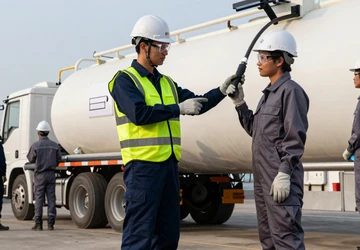
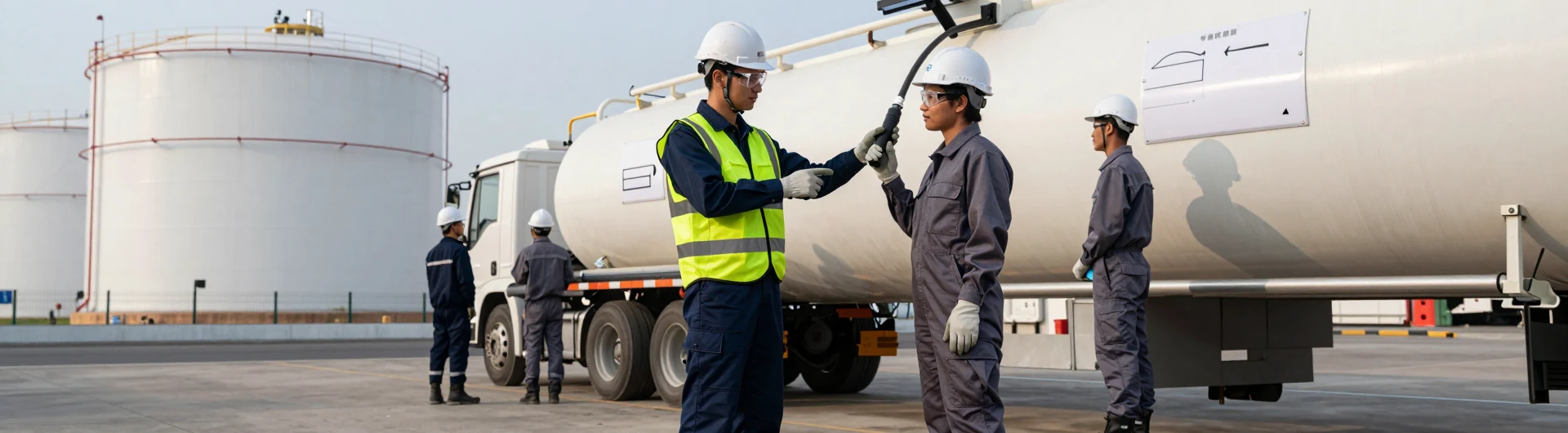
A loading gantry is where product, vehicle and people meet. Before loading, the driver is identified, the vehicle checked and the earth bonding connected so static cannot build up. Overfill protection stops the pump, and vapours are sent to a recovery system where one is fitted.

Study Duration 30 Minutes
Attachments 0
Marine loading and ship-to-shore safety

Loading a ship is a joint job between vessel and terminal. They agree the plan, check each other's equipment on a shared safety checklist, and keep clear communication throughout. Moorings, hose connections and weather are watched constantly, and either side can stop the operation.

Study Duration 30 Minutes
Attachments 0
Risk Control
2 Parts | 0:55 Hours
Fire and explosion hazards

Fire needs fuel, air and an ignition source. In a terminal the fuel is always present, so control focuses on the ignition source and on keeping vapour from collecting. Static electricity, hot work, vehicles and electrical equipment are the usual sources, and bunds and foam systems limit the size of any fire.

Study Duration 30 Minutes
Attachments 0
Spill prevention and response

Most spills come from overfills, wrong valve positions and equipment left open. Prevention is simpler than clean-up: alarms that work, checks that are done and drains that are closed. A response plan with trained people and ready equipment keeps a small spill from becoming a big one.

Study Duration 25 Minutes
Attachments 0
Certificates
1 Parts
Course Certificate
Course Certificate
If you pass all the lessons in this course, you will receive this certificate.
Type Course Certificate
Reply to Comment
Comments Approval

Your comment will be visible after admin approval.

0
0 Reviews
Content Quality (0)
Instructor Skills (0)
Value for Money (0)
Support Quality (0)
Reply to Review
Submit Reply

Your reply to this review will be visible to all users.

Storage Tanks, Terminals and Loading Safety
$385,000

This Course Includes

Official Certificate
Instructor Support

Course Specifications

Sections
4
Lessons
8
Capacity
Unlimited
Duration
3:45 Hours
Students
0
Created Date
4 Nov 2026
Updated Date
4 Nov 2026
Storage Tanks, Terminals and Loading Safety
You are viewing
Storage Tanks, Terminals and Loading Safety