


























Gas Treatment and Dehydration Essentials

Instructor
What Will You Learn?
About This Course
Requirements

FAQ
Check the frequently asked questions about this course.
Spark Training Institute

Curriculum Overview
This course includes 4 modules, 8 lessons, and 3:45 hours of materials.
Produced gas is mostly methane, but it also carries heavier hydrocarbons, water vapour and often CO2 or hydrogen sulphide. Each component affects value, safety or equipment, so the plant's job is to separate what the customer wants from what they do not.
Gas can only enter a pipeline if it meets the buyer's specification. The main limits cover water content, hydrocarbon dew point, heating value and the level of sulphur and CO2. These limits protect pipelines from liquids and corrosion and keep customers' burners working properly.
Water in a gas line is trouble. Combined with CO2 or H2S it makes acid that corrodes steel. Under pressure and at low temperature it can also form hydrates, which are ice-like solids that can block a line completely. Removing the water prevents both problems.
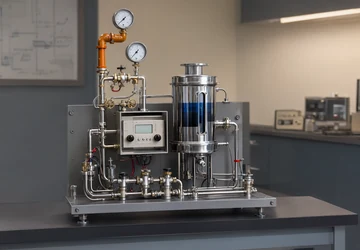
In a glycol unit, wet gas rises through a contactor where triethylene glycol flows down and absorbs the water. The wet glycol is then heated in a regenerator to boil the water off, and the dry glycol returns to the top of the contactor to work again. Molecular sieves are used when very dry gas is needed.
Hydrogen sulphide is toxic at very low concentrations and it dulls the sense of smell, so you cannot rely on your nose to warn you. CO2 is not toxic in the same way but it is corrosive when wet and displaces oxygen in enclosed spaces. Both are called acid gases.
In an amine unit, sour gas meets a solvent in an absorber and the acid gases dissolve into it. The rich solvent is sent to a stripper where heat releases the acid gases, and the lean solvent is cooled and returned. The cycle runs continuously, and the quality of the solvent decides how well it works.
Good operators watch trends rather than single readings. A slow rise in differential pressure, a creeping water dew point or a growing solvent make-up rate are all early signs. Catching them early costs a small adjustment; catching them late costs a shutdown.
Most treating problems have a handful of familiar causes. Foaming comes from contaminants, carry-over from high rates, hydrates from cold and wet gas, and corrosion from poor control of acid gas and oxygen. A calm, step-by-step approach finds the cause faster than guessing.
Course Certificate
Course Specifications




Subscribe to Our Newsletter


Additional Links
Login Register Contact Certificate Validation Become Instructor About Terms and PoliciesPopular Categories
Health, Safety and Environment (HSE) Management and Leadership Business Administration Banking and Finance Drilling and Well Services Mechanical EngineeringContact US




Reply to Comment